
Outcomes After Bluebonnet Detention
Bluebonnet is an immigration detention facility, not a county criminal jail and not a TDCJ prison. ICE may release a person under an immigration order or reporting conditions, transfer the person within the ICE network, execute removal, or hand the person to another government authority. Each outcome ends the Bluebonnet location episode, but only one necessarily describes return to the community.
A Jones County criminal case can end while immigration detention continues. A Sheriff release entry that says transfer to ICE establishes the local handoff, not the later immigration disposition. Conversely, an ICE departure does not establish dismissal, acquittal, or sentence completion in a Texas court. Keep the county booking record, immigration custody record, and court outcome separate.
Confirm a Bluebonnet Custody Change
- Collect the nine-digit A-number, country of birth, exact legal name, and date of birth. Add leading zeroes when an A-number has fewer digits.
- Search the official ICE Online Detainee Locator. The strongest route uses A-number and country of birth; the name route requires exact matching and country of birth.
- Read a result as an ICE-reported custody relationship, not as a Jones County criminal disposition. Follow the listed facility or field-office route.
- If there is no result, check spelling, hyphens, birth information, and A-number formatting. ODLS can lag, omit minors, withhold results, and fail exact-name matching.
- Contact the Dallas ERO field-office or facility route to ask whether the person was released, transferred, removed, or delivered to another authority.
- Use immigration court or EOIR information for the case disposition, and use ICE FOIA for a historical custody outcome. Consent or identity verification may be needed.
ICE’s attorney-resource guidance describes people currently detained or released from ICE custody within the last 60 days, but that scope is not a complete public release archive. A no-result cannot establish community release. For a broader comparison of custody systems, use the Jones County released-inmate guide.
Bluebonnet Contact and Records
Bluebonnet Detention Facility
400 2nd Street
Anson, TX 79501
ICE ERO Dallas oversight
The official research identifies no facility telephone number that should be borrowed from a commercial directory. Use the current ICE detention-facilities directory for facility and ERO routing. ICE’s Detention Reporting and Information Line is 1-888-351-4024, Monday through Friday excluding holidays, 8 a.m. to 8 p.m. Eastern, with language assistance.
For historical records, file a focused ICE FOIA request using the A-number and identifying details. Ask for the public or releasable portions of the detention history, facility movements, release or transfer date, disposition type, and destination when available. The subject’s consent or identity verification may be required for protected material. An immigration court record can explain the legal order, while the ICE custody record documents agency processing.
About Bluebonnet Detention Facility
Bluebonnet is owned by Jones County and operated by Management & Training Corporation under ICE oversight. DHS’s 2024 inspection describes ICE ERO Dallas oversight, opening in December 2019, and operation under the 2011 Performance-Based National Detention Standards as revised in 2016. It holds male and female detainees across classification levels for periods greater than 72 hours.
The federal facility directory is the appropriate source for this immigration setting. Open ICE’s detention-facilities source before viewing the matched capture below.
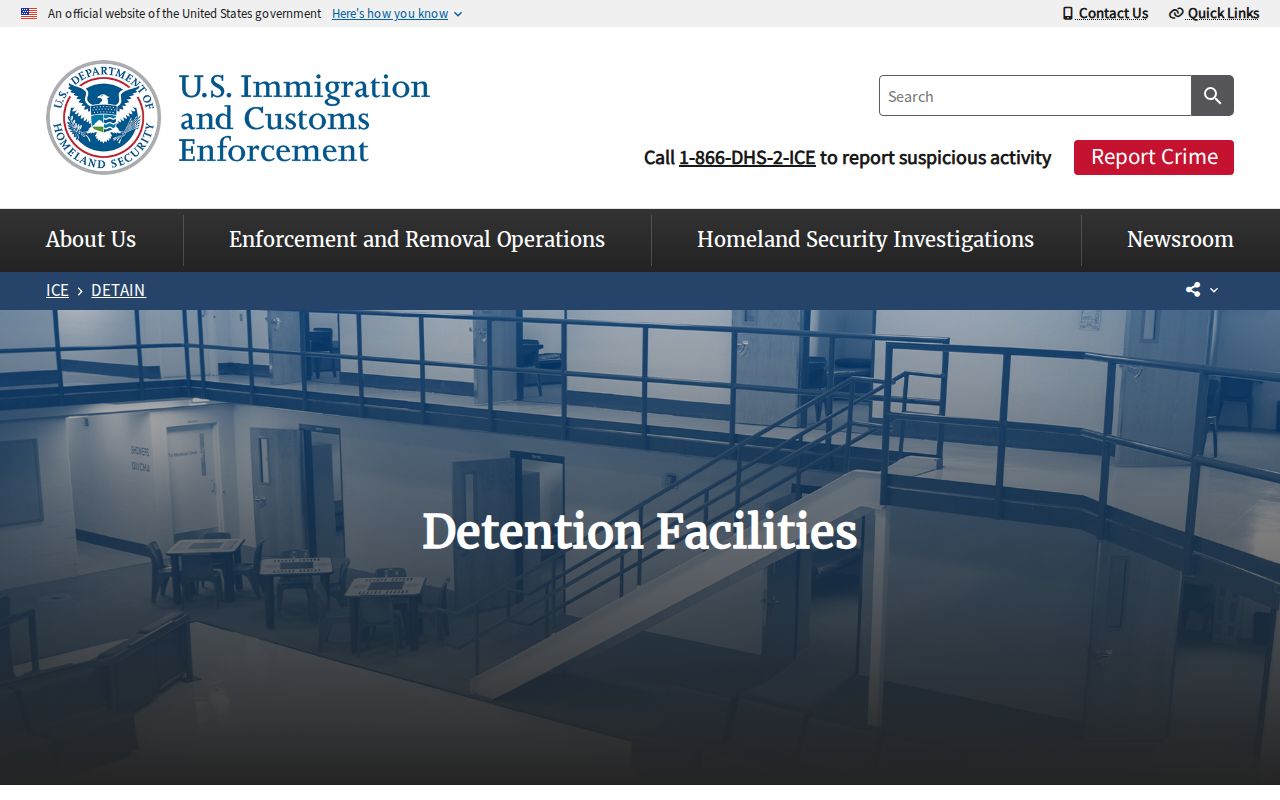
The ICE directory anchors Bluebonnet in the federal detention network, which is why ODLS and ERO records take priority over a county inmate roster.
Four Custodians Share Jones County
Jones County’s correctional footprint includes four unlike settings. Jones County Jail serves local criminal custody. John Middleton Unit is a TDCJ transfer facility. French Robertson Unit is a TDCJ prison and regional release site. Bluebonnet serves federal immigration detention.
Location alone does not identify the legal authority. “Jones County inmate” may mean a person merely housed within county boundaries, not someone prosecuted by a Jones County court. Search the custodian that assigned the identifying number: Sheriff booking number for local jail custody, TDCJ or SID number for state prison, and A-number for ICE. Each agency’s release record answers only its own episode.
This mixed footprint also makes transfers plausible. A person leaving the Sheriff’s jail for Bluebonnet remains detained. A person leaving Robertson on parole enters state supervision, not immigration proceedings. A person leaving Bluebonnet through removal does not enter the Jones County community. Record both sending and receiving authority.
ICE Transfer Is a Concrete Local Path
Bluebonnet makes immigration transfer more than a generic warning in Jones County. Commissioners Court materials document contract activity involving ICE and the facility, while archived ICE material dates the opening to 2019. A local jail disappearance can therefore reflect a nearby handoff into federal immigration custody.
ODLS exact-match rules, technical lag, safety or security omissions, transfer, and removal all limit what a no-result means. ICE describes the attorney-resource channel as covering people currently detained or released within the preceding 60 days, but no public result is still not proof that a person entered the community. Call ERO and request the historical record when the distinction matters.
If the record says transfer, identify the receiving ICE facility. If it says release, ask what official record establishes the date and any conditions. If it says removal, preserve that terminology. If another authority took custody, use that agency’s locator or court record next.
Movement Is Not Discharge
The same rule applies across Jones County facilities even though the governing law changes. Middleton may transfer a prisoner deeper within TDCJ. Robertson may process parole or discharge but also sends unit transfers. Bluebonnet may move a detainee within ICE. A physical departure is therefore only the first fact.
For Bluebonnet, ODLS and the ICE movement record distinguish a new detention location from release. EOIR or immigration-case materials help explain the legal proceeding. For Robertson and Middleton, statewide TDCJ status and the release transaction perform that role. For the Sheriff’s jail, the booking-out entry and court docket control. The correct pairing prevents transfer dates from being published as release dates.
Immigration and Criminal Cases Stay Separate
EOIR case information and immigration orders concern the federal immigration proceeding. A Jones County criminal court file concerns charges prosecuted in the county or district court. One case can change while the other continues. For an identified misdemeanor or county-court matter, contact the County Clerk; for a district felony, contact the District Clerk. The County Clerk’s visible LGS portal is not advertised as a criminal case search.
A dismissal or sentence completion may explain release from the county jail but does not cancel an ICE detainer or immigration order. An immigration release also does not erase a criminal case. Compare cause number, A-number, dates, and agencies rather than treating one system’s no-result as a universal outcome.
Notification Systems Have Different Scope
Texas IVSS-Counties covers county custody events and replaced the legacy county VINELink workflow in September 2025. Statewide TDCJ IVSS covers TDCJ custody and parole or mandatory supervision. Neither is the general Bluebonnet locator. The VINELink Release Check page explains those Texas channels.
DHS-VINELink is a separate qualifying-victim and witness notification program concerning people in DHS custody. It is not a general substitute for ODLS and should be used only within its stated program scope. For ordinary Bluebonnet location questions, begin with ODLS and ERO.